



High Point
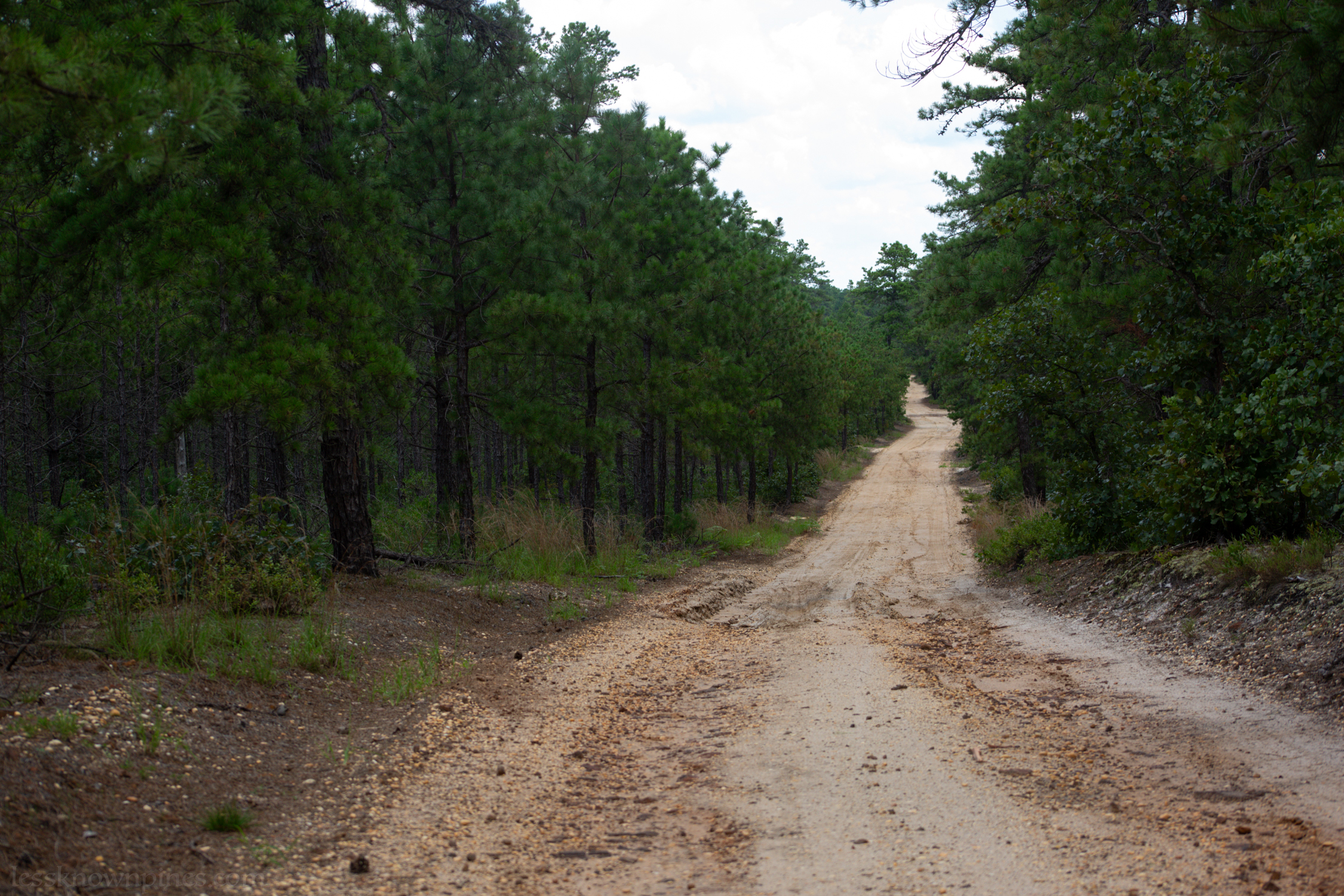
The Pine Barrens has countless hills and is far from being completely flat. At the top of these hills, trees tend to be much smaller and grow in a distinctly different manner.
At a Higher Elevation
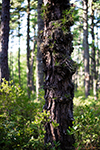
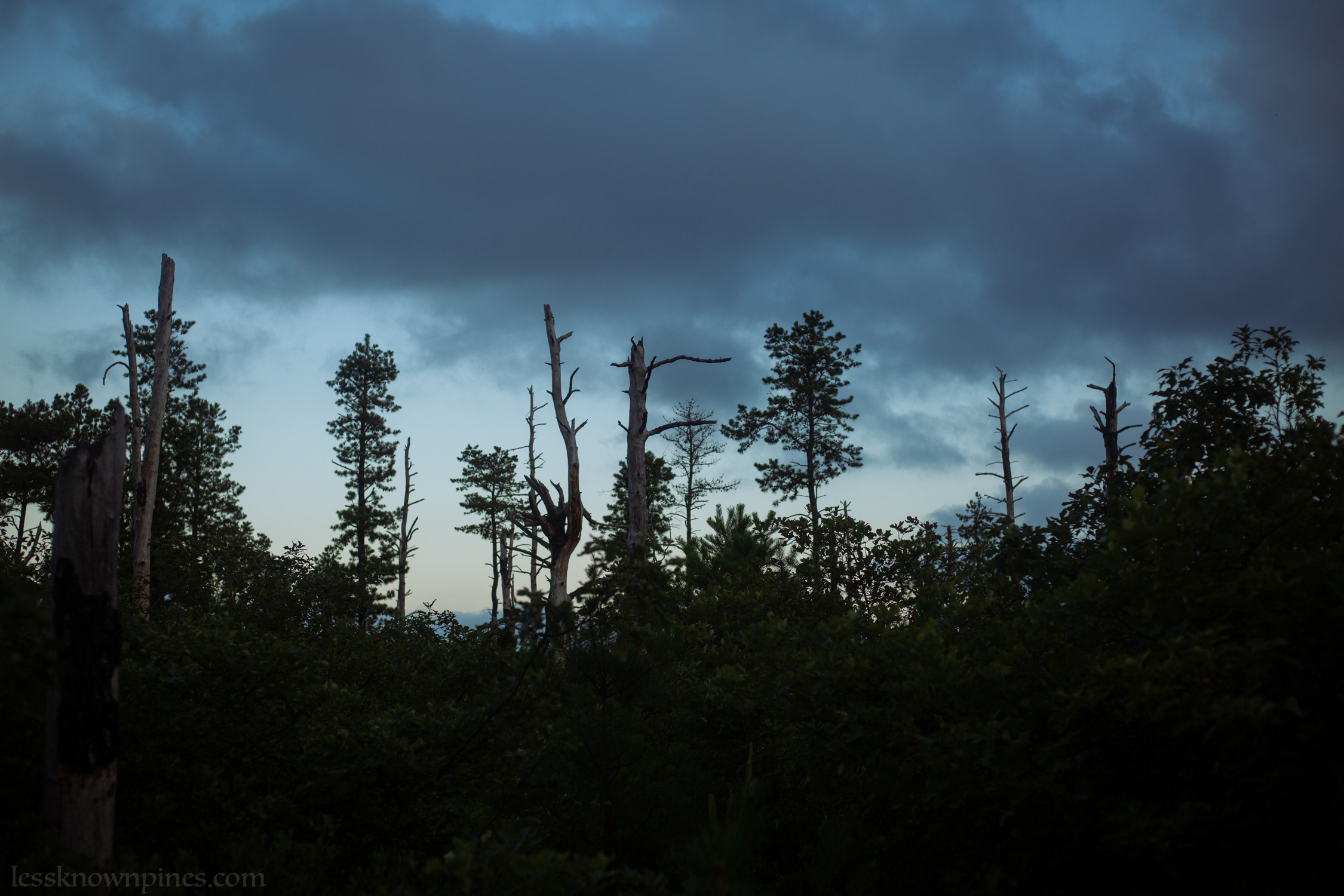
As the elevation rises, the trees become smaller or may grow at a much lower density. These trees grow farther apart, leaving more open space. This high elevation serves as an irrigation point for cedar forests and their irrigation systems. Water can flow downwards from the slope of a hill and hydrate the tree roots. Water will end up in a pond before being distributed to more cedar forests.
Hollow Area
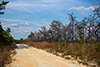
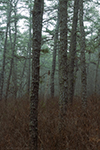
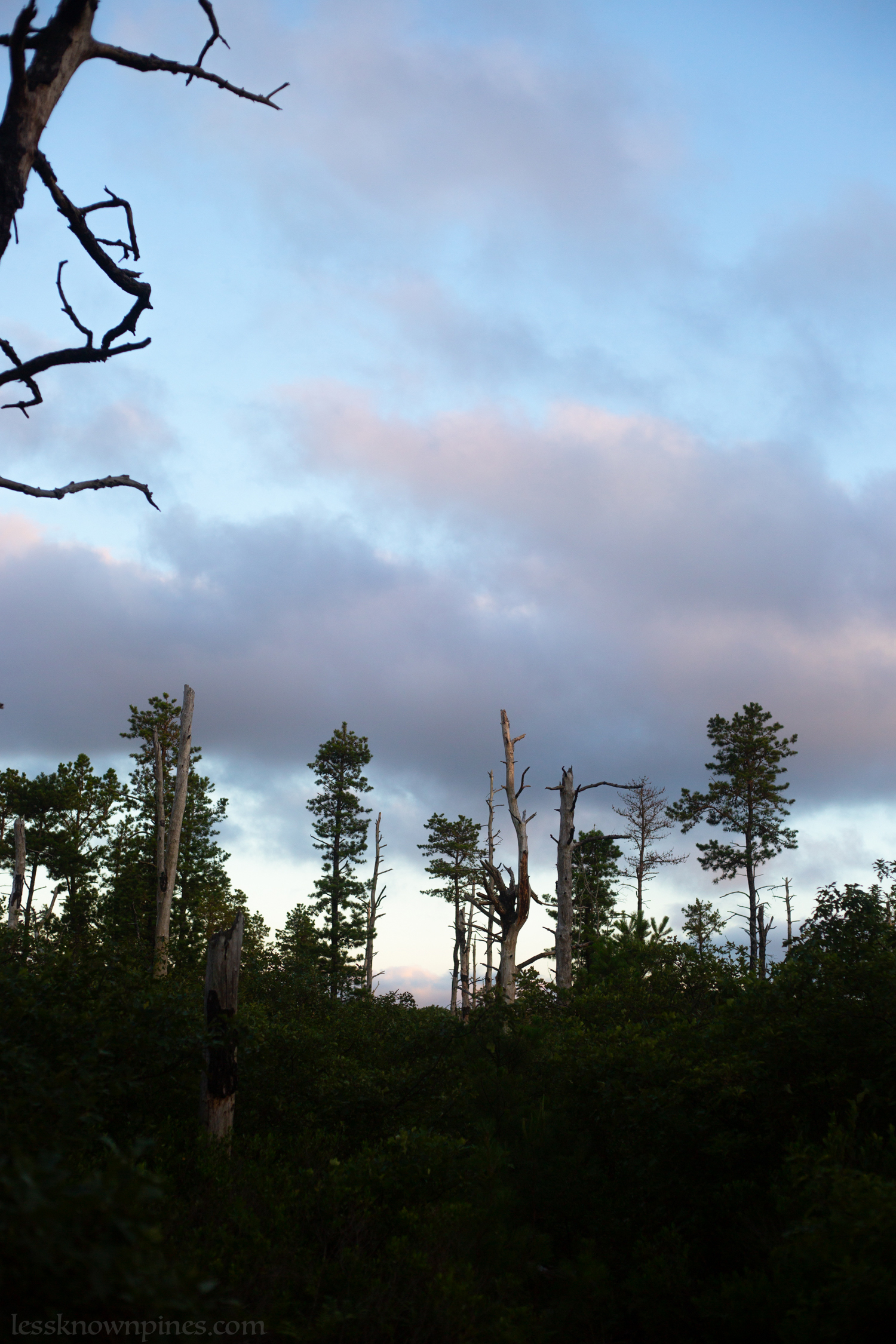
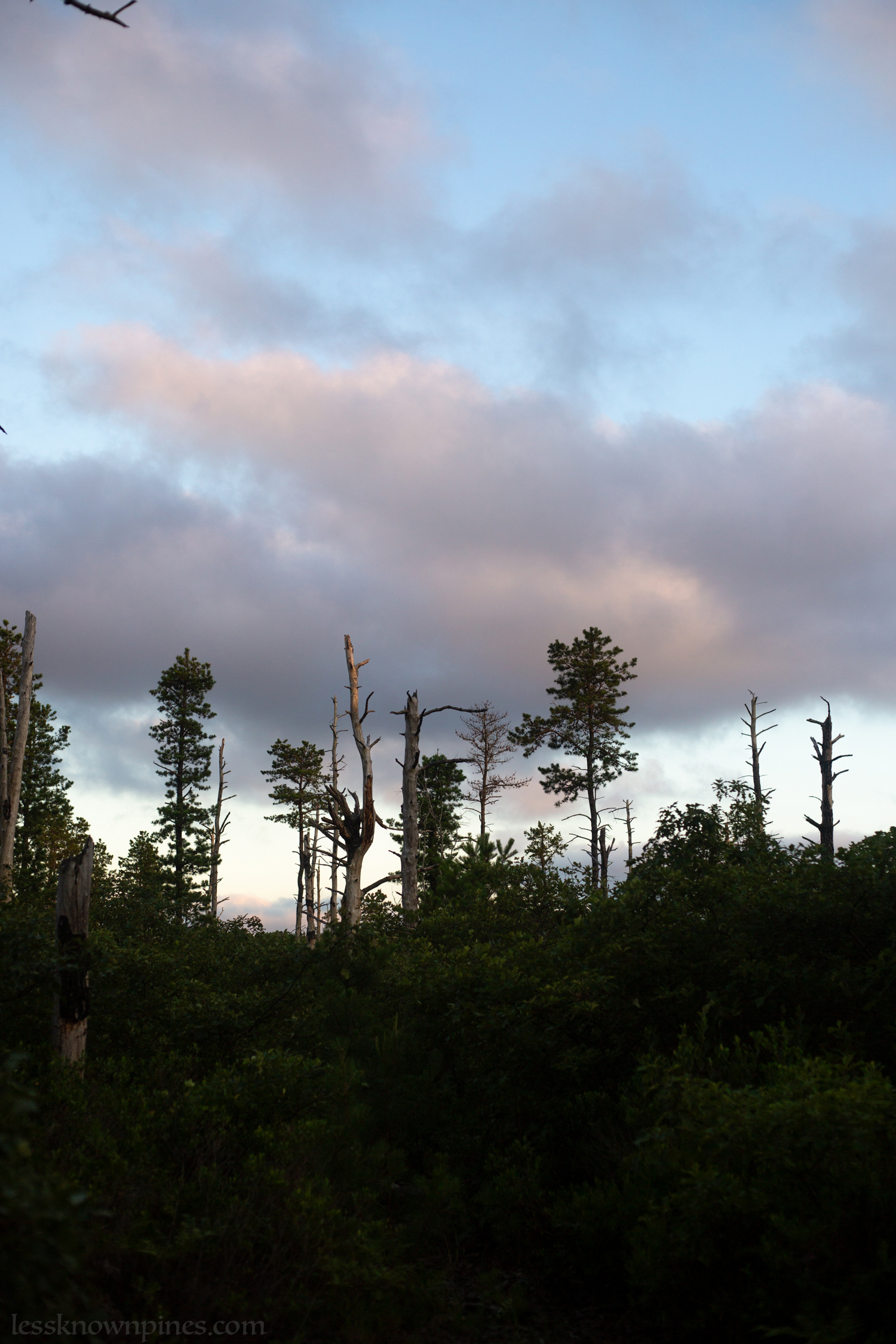
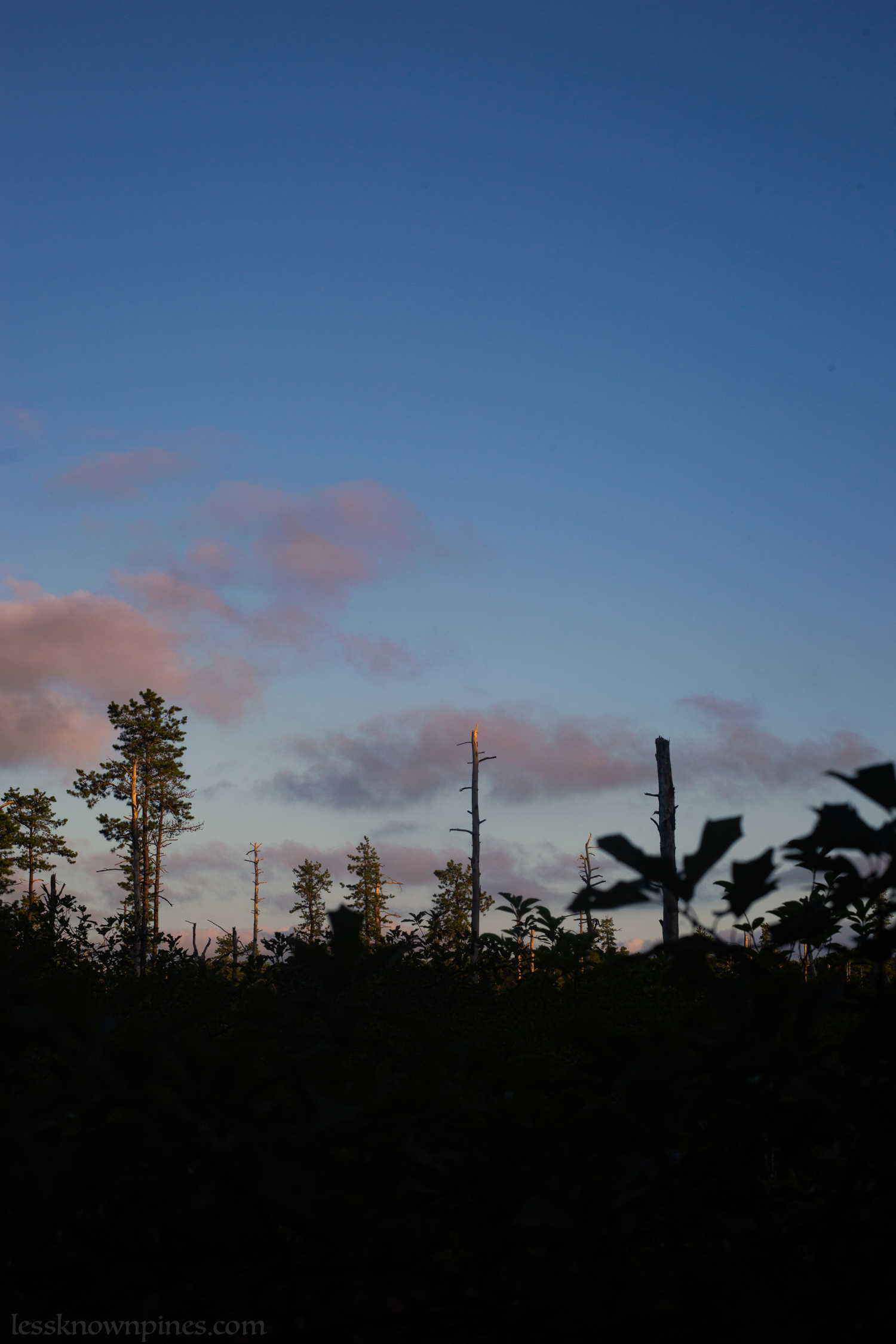
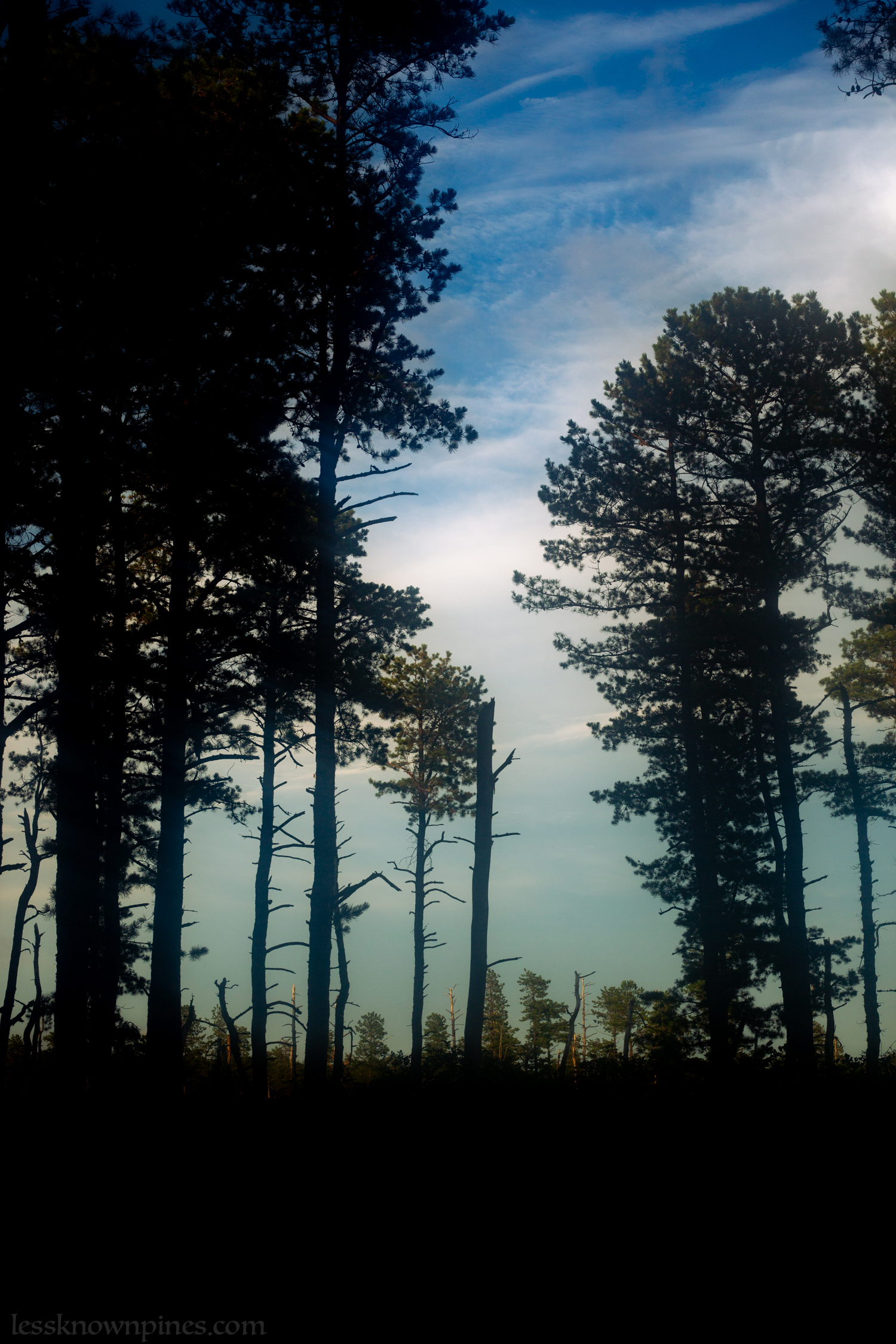
Surrounded by vast upland forests, this area is situated on a pineland hill, where miles of pine trees and bushes stretch out. A hollow at the very top brings emptiness to the landscape. The denser forest gradually becomes less dense as it nears the top of the hill. The trees become farther apart until reaching the very hollow area.
New Forest Growth
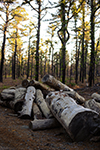
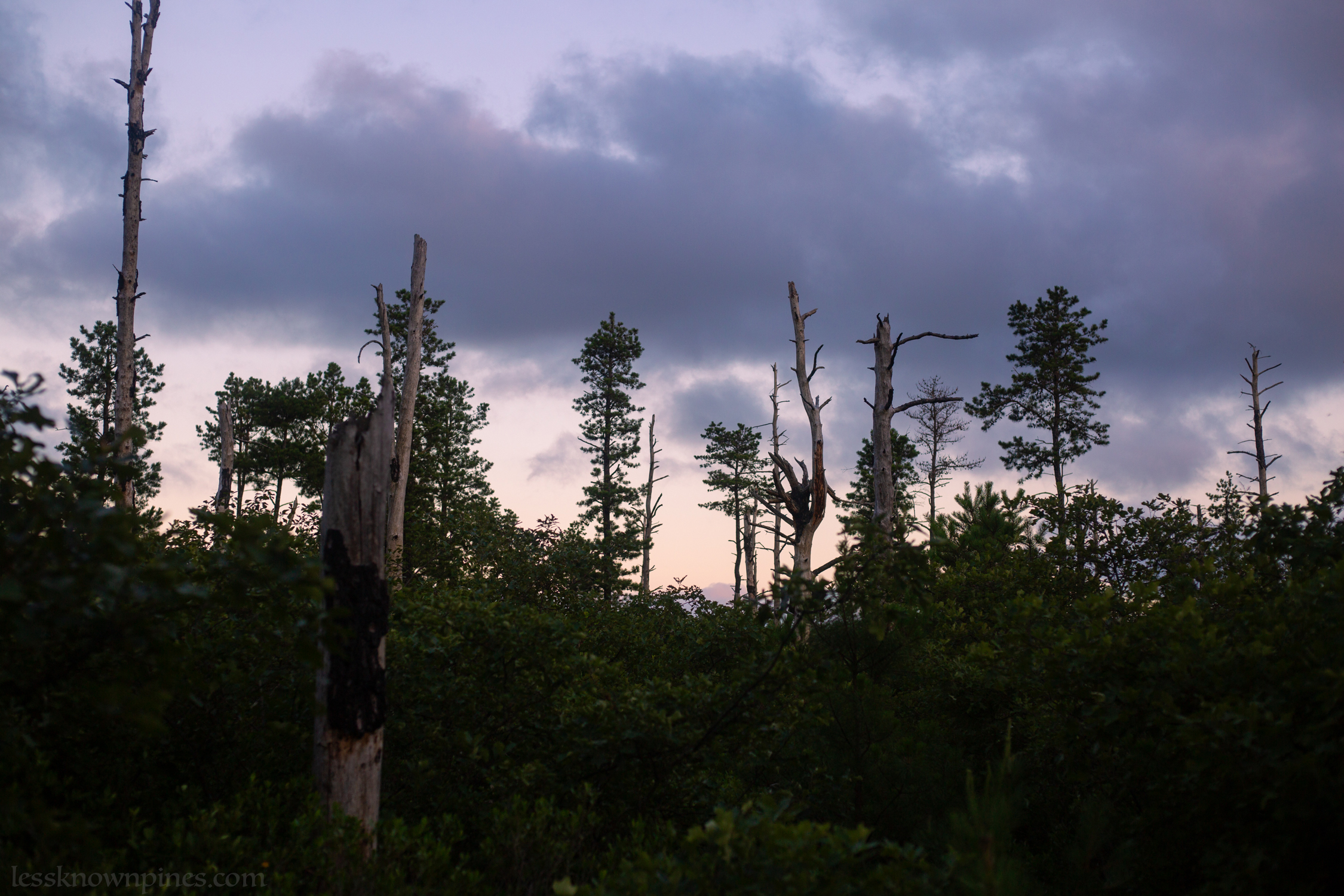
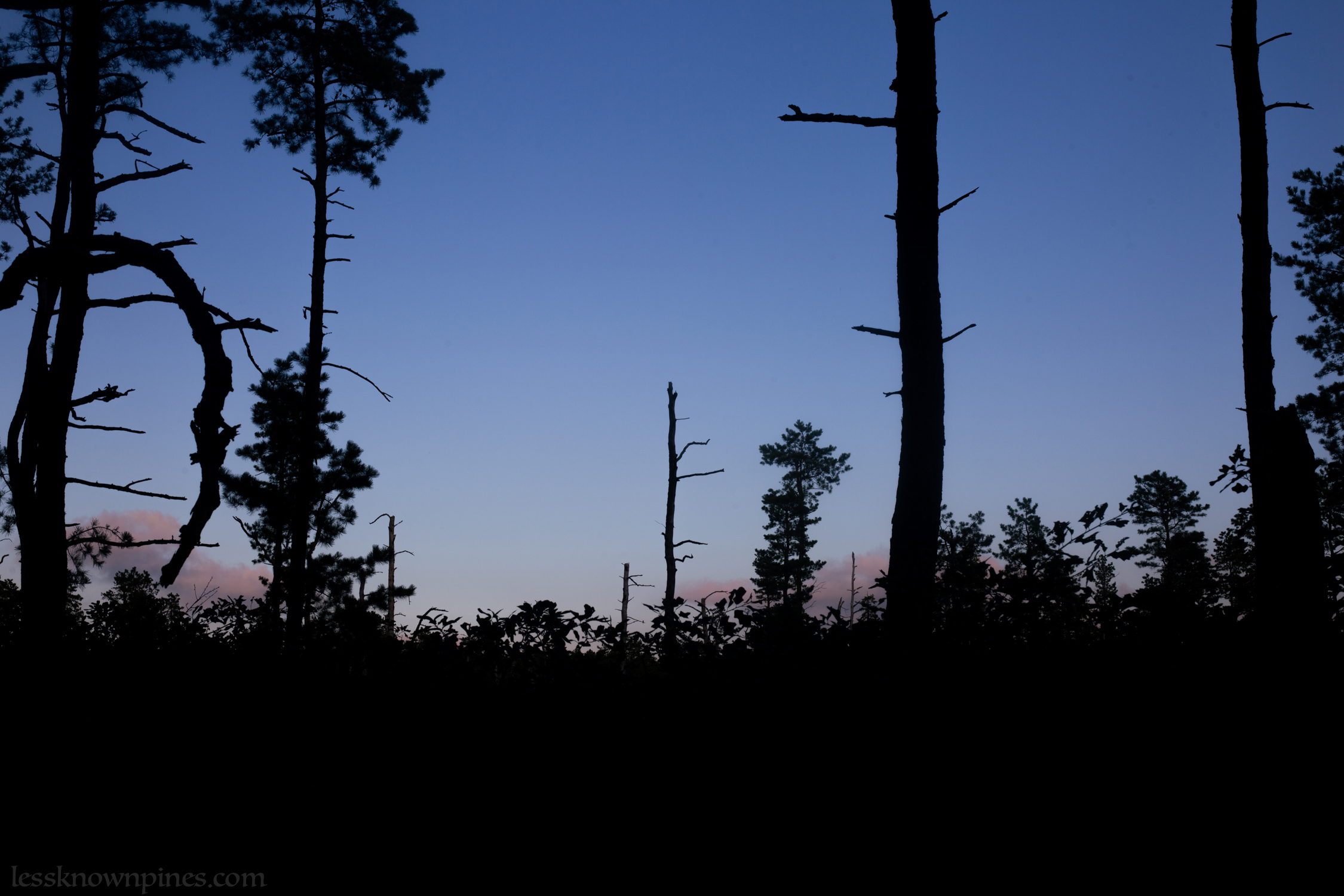
Although these trees are decaying slowly, a new forest (or possibly a mature pigmy) may eventually grow into a new, full woodland. Scrub oak and pine trees begin to grow, with a few old tree carcasses still standing. These trees could be new growth; however, they could also be dwarf trees.
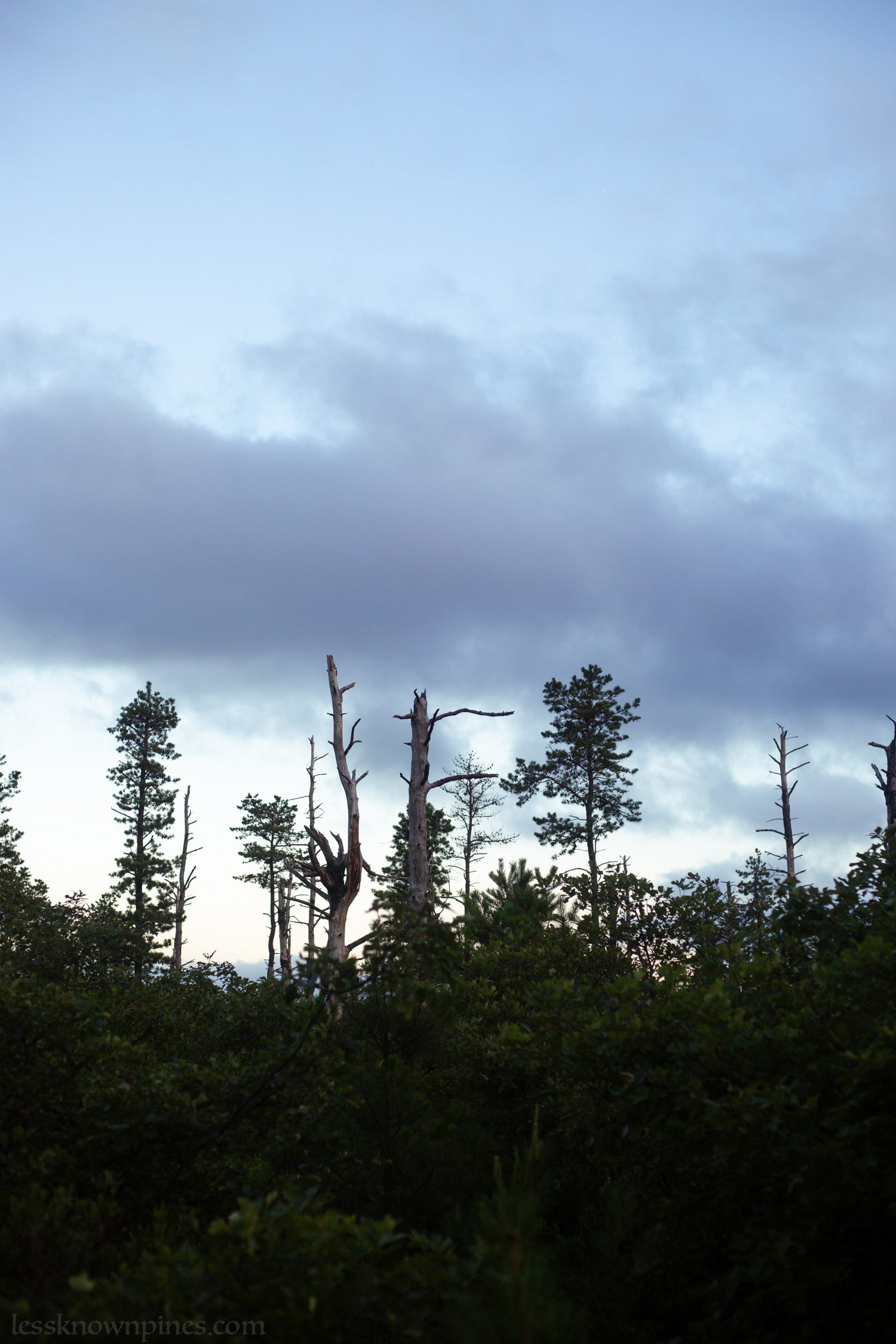
Either low-nutrient soil or a natural/artificial disaster may have destroyed this area of forest. Even the full-sized trees beyond the dead area avoid growing within the forbidden space.
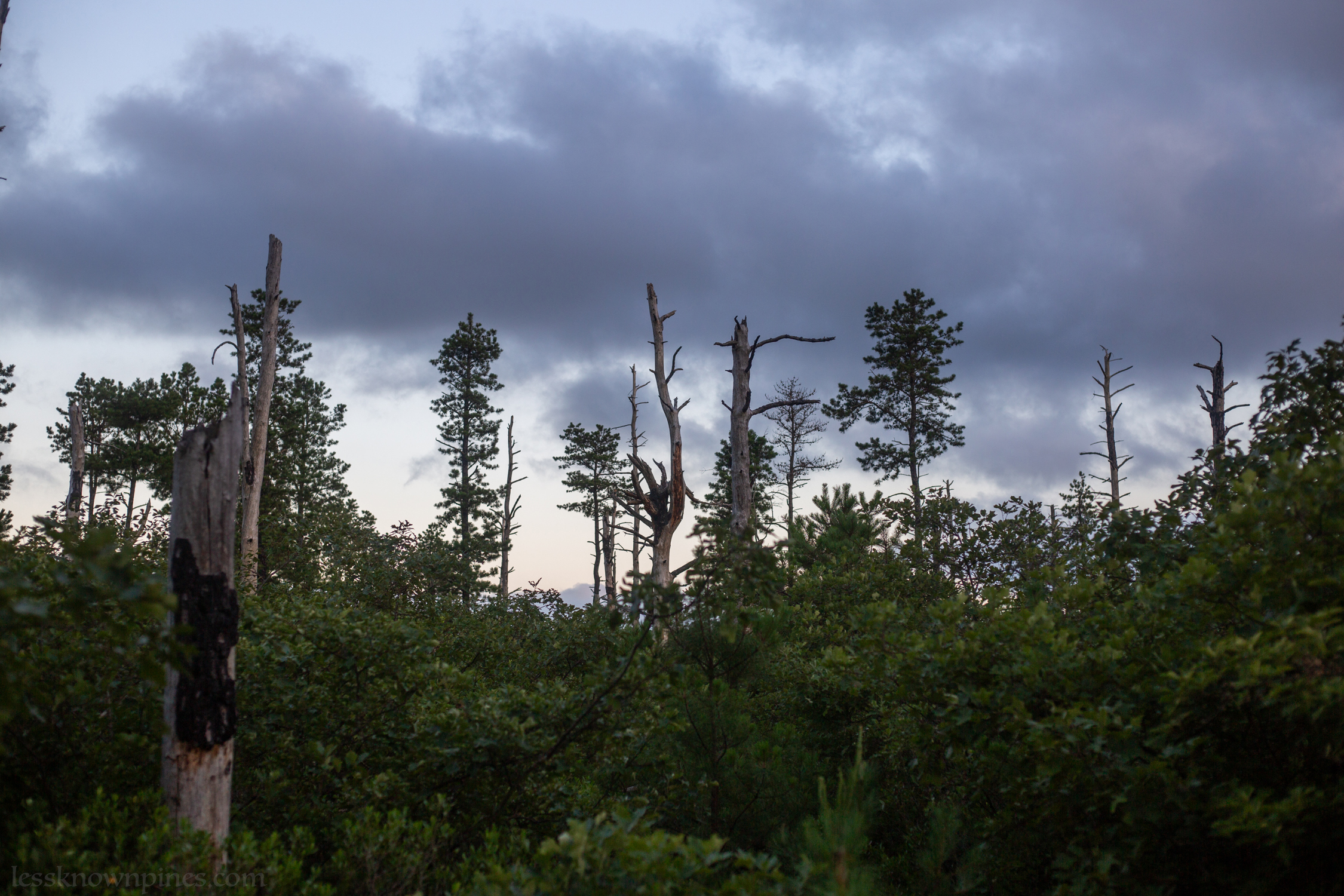 Some tree skeletons decay slowly as new trees grow around